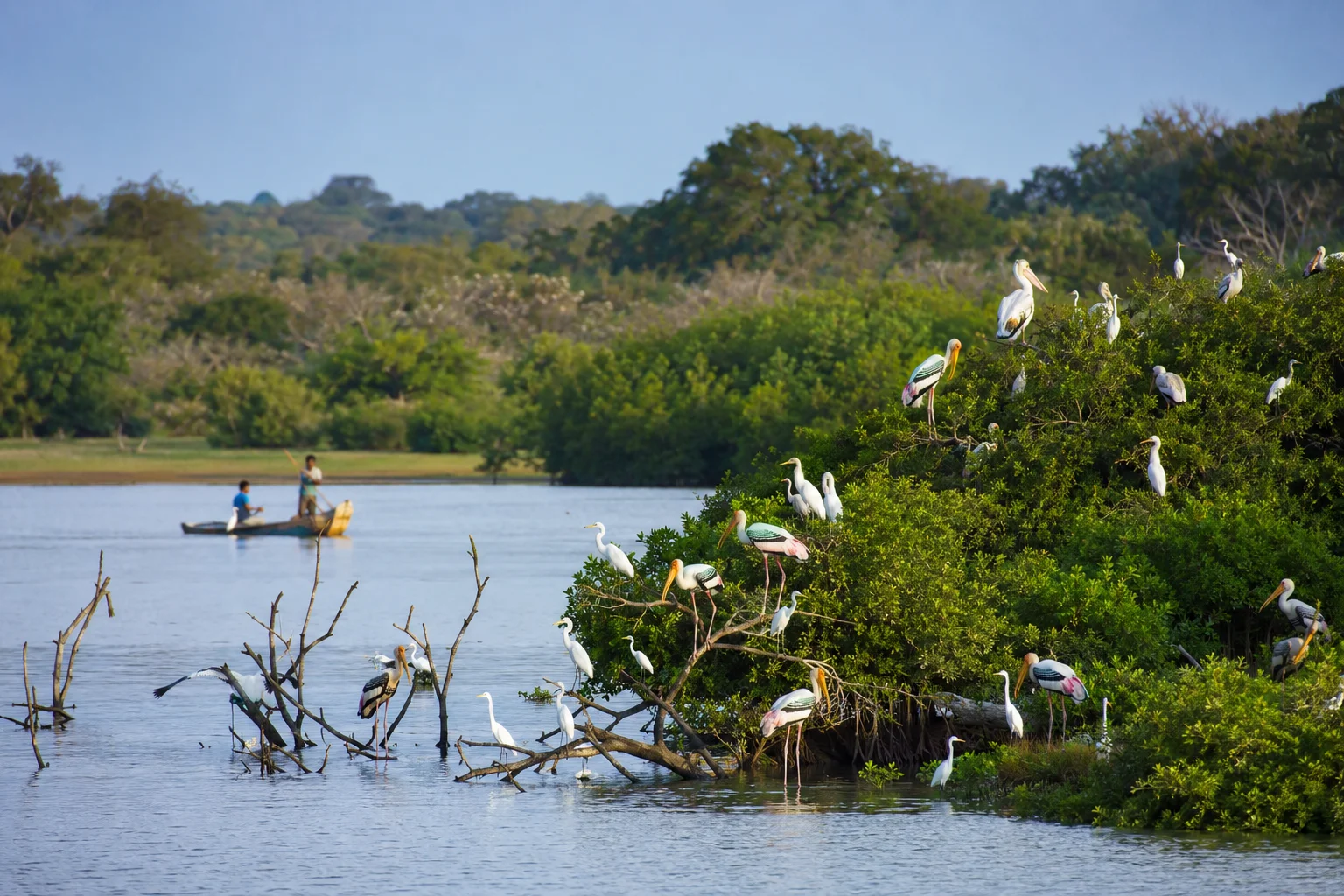
Pelicans, painted storks and egrets in the wetlands of Kumana
← Back to Destinations

EXPLORE EVERY CORNER

Kumana National Park

A quieter wetland park adjoining Yala's eastern boundary, known particularly for large nesting colonies of water birds during the breeding season.
RecommendedA full day DistrictAmpara RegionEast Coast

THE COMPLETE DESTINATION GUIDE

Discover Kumana National Park

Kumana lies just beyond Yala National Park's eastern boundary, separated from its more famous neighbour by a river, and is best known among specialists for its Kumana Villu, a natural swamp lake that becomes a major breeding site for numerous species of water birds during the appropriate season. Large nesting colonies of herons, egrets, storks, ibises and other water birds gather here, making Kumana a genuinely significant site for birdwatchers, distinct from the leopard-focused reputation of Yala next door.

Beyond its bird colonies, Kumana shares much of the same broader ecosystem and wildlife as Yala, including elephants, crocodiles and the possibility, though considerably less reliable than at Yala, of leopard sightings. The park sees far fewer visitors than Yala, both because it is less well known and because it is somewhat less accessible from the main southern tourist routes, more commonly visited from the Arugam Bay side on the east coast than as a day trip from the south.

This lower visitor volume gives Kumana a genuinely quieter, more understated safari experience, appealing to travellers who have found Yala's peak-season crowds around a good sighting less to their taste, or who are specifically drawn by the park's birdwatching reputation rather than the search for predators. Safari drives here follow the same general format as elsewhere — open jeep, licensed guide, typically morning or afternoon — though the park's more remote character means logistics are worth planning slightly further in advance.

As with Yala, Kumana was formerly known as Yala East National Park before being separately designated, and this shared history explains the strong ecological overlap between the two protected areas.

PLACES TO DISCOVER

Highlights of Kumana National Park

Select any place to open its complete guide directly below the row.

01

Signature highlight

Kumana Bird Sanctuary

Kumana Bird Sanctuary is an important part of the kumana-national-park experience and deserves more than a passing stop.

02

Place to visit

Kumana Villu

Kumana Villu is an important part of the kumana-national-park experience and deserves more than a passing stop.

03

Place to visit

Safari Drive

Safari Drive is an important part of the kumana-national-park experience and deserves more than a passing stop.

04

Place to visit

Kudumbigala Monastery

Kudumbigala Monastery is an important part of the kumana-national-park experience and deserves more than a passing stop.

05

Place to visit

Okanda Temple

Okanda Temple is an important part of the kumana-national-park experience and deserves more than a passing stop.

06

Place to visit

Eastern Wetland Birding

Eastern Wetland Birding is an important part of the kumana-national-park experience and deserves more than a passing stop.

TRAVEL WELL

Good to Know

Practical travel notes

Book a licensed safari jeep and guide familiar with Kumana specifically, as it is less standardised a circuit than Yala and benefits from local knowledge. The park is most conveniently accessed from the Arugam Bay area — factor this into planning if based on the south coast instead. Bring binoculars if birdwatching is a specific interest.

Accessibility

As with other safari parks, access is by open-topped jeep on unpaved tracks, involving a step up to board, and the park's more remote roads can be rougher than at more developed parks.

TAILOR-MADE FOR YOU

Include Kumana National Park in Your Journey

Tell us what inspires you and our local team will shape the route around your pace.
Plan My Tour →
Call our travel team+94 71 757 6753 Email your ideasinfo@lankantravel.com Quick responseChat with us on WhatsApp