
THE COMPLETE DESTINATION GUIDE
Discover Pinnawala
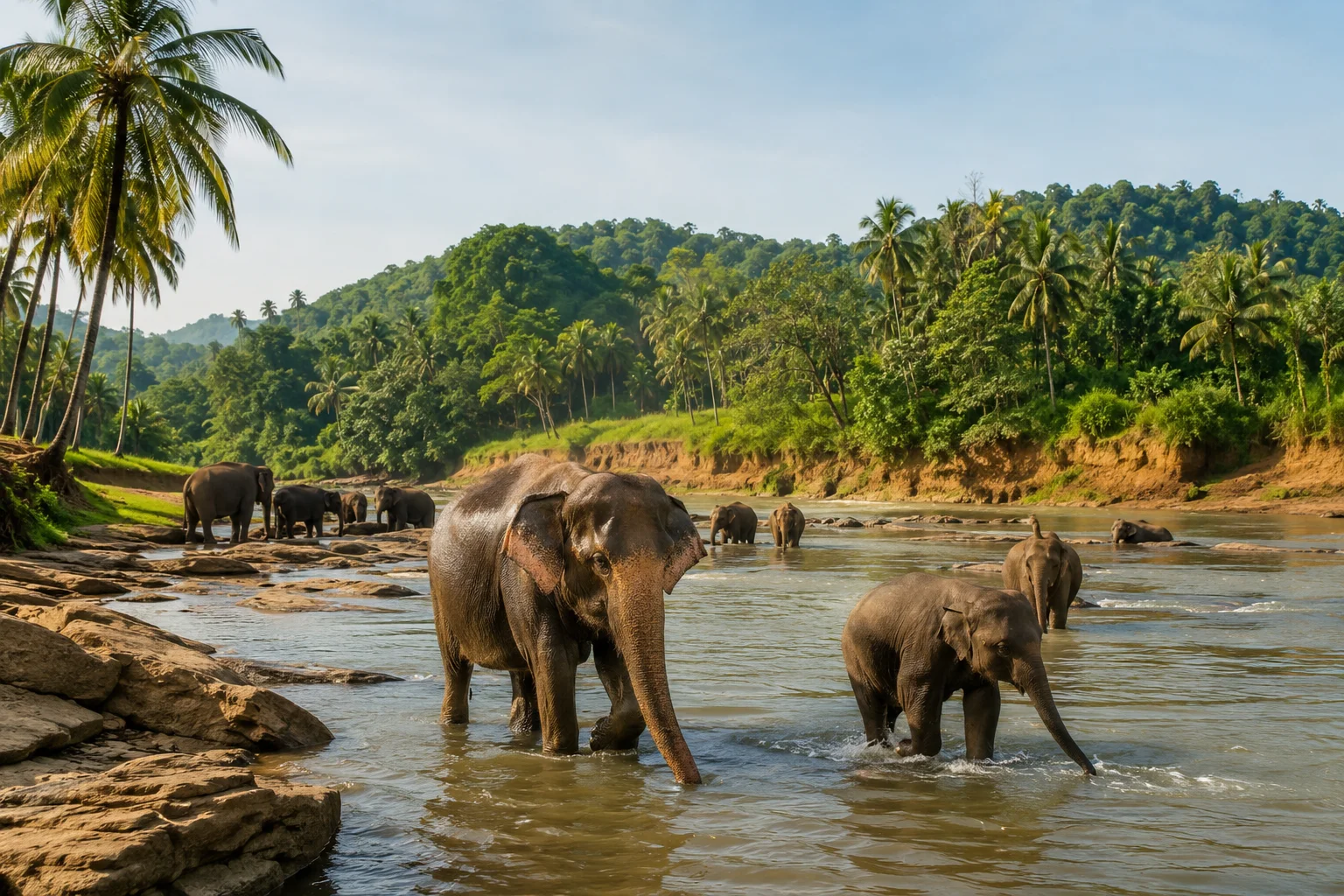
Pinnawala is best known for its elephant orphanage, established decades ago to care for young elephants displaced or injured in the wild, which has grown over time into a much larger resident herd. Visitors typically come to see the elephants at feeding times, when young animals are bottle-fed by keepers, and — for many, the highlight of a visit — during the herd's twice-daily walk to bathe in the adjacent Maha Oya river, when dozens of elephants of different ages move and bathe together in open water.
The orphanage sits within a small town that has grown up around it, with a scattering of craft shops, including several producing paper made from elephant dung, a distinctive local product. A visit here is usually brief compared with the region's larger cultural sites, and Pinnawala is very commonly combined with a day trip from Kandy or visited en route between Kandy and Colombo, given its position roughly midway between the two.
As an institution built around the welfare of elephants that cannot be returned to the wild, Pinnawala differs in character from a wildlife park safari — it offers close, guaranteed sightings of elephants rather than the search-and-find nature of a safari drive, which some travellers prefer, particularly families or those with limited time. Visitors interested in the welfare practices and history of the orphanage can find further detail on site, and it is worth approaching the visit with realistic expectations of what a captive elephant herd, however long-established, represents compared with elephants in the wild.
As with any animal attraction, standards and practices can change over time, and travellers with particular concerns about animal welfare are encouraged to research current conditions before visiting.