
THE COMPLETE DESTINATION GUIDE
Discover Sinharaja Rainforest
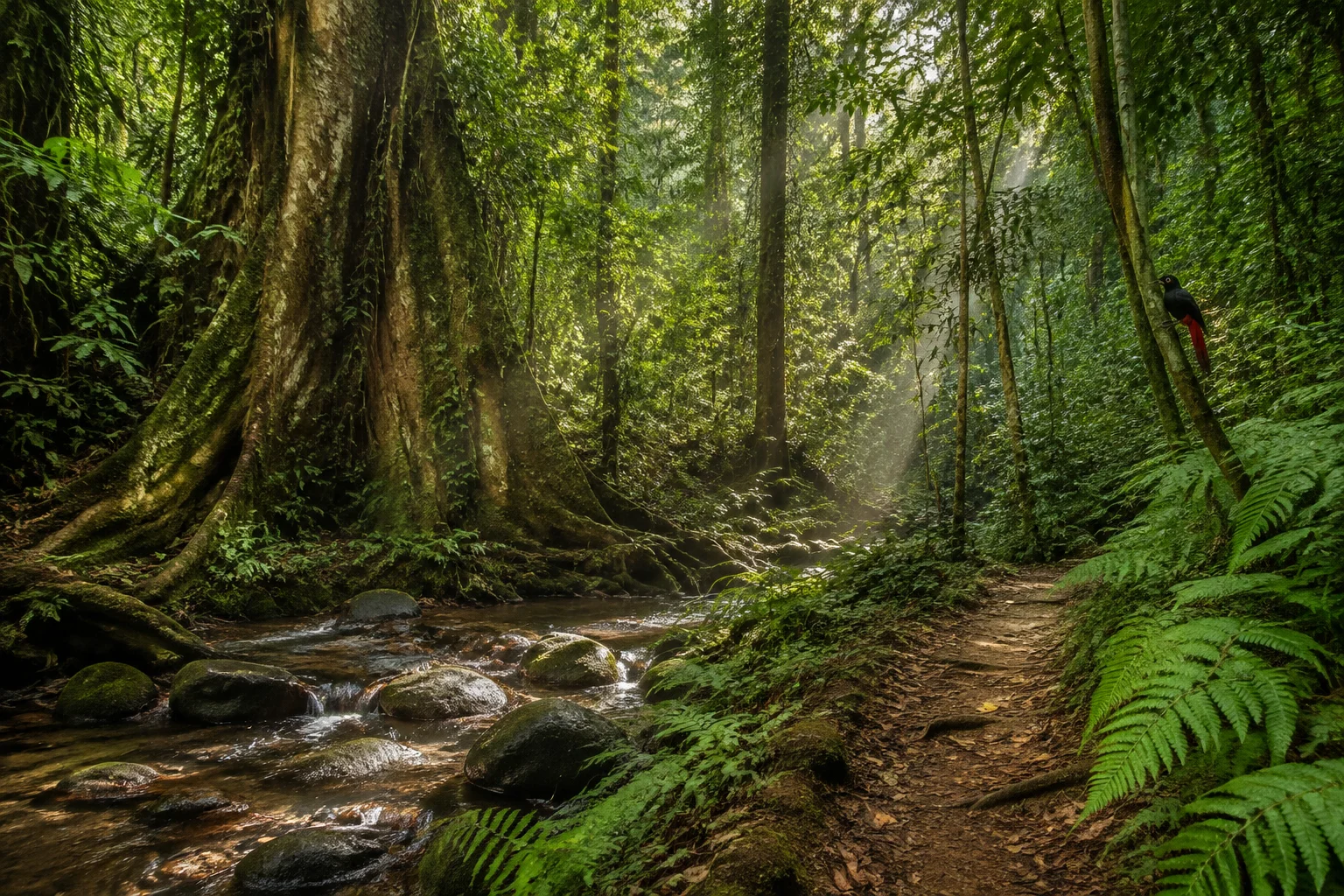
Sinharaja protects one of the last substantial remnants of Sri Lanka's lowland rainforest, and its ecological significance is considerable: a high proportion of the island's endemic plant and animal species — found nowhere else in the world — occur within this relatively compact area of forest. Unlike the dry-zone safari parks visited by jeep, Sinharaja is explored on foot along forest trails, with a mandatory local guide who knows the terrain and is far more likely to spot the forest's more elusive residents than an independent visitor would manage alone.
The forest is particularly renowned among birdwatchers for its mixed-species feeding flocks — foraging groups that can include a striking number of endemic bird species moving together through the canopy — and patient, quiet observation with a knowledgeable guide considerably improves the chances of good sightings. Beyond birds, Sinharaja supports endemic reptiles, amphibians and a purple-faced langur population, along with an extraordinary density of plant species, many found only within this forest and a handful of similar remnants elsewhere on the island.
Trails range from relatively gentle, well-trodden paths near the main entrance to longer, muddier routes further into the forest, and the humid, often wet conditions underfoot are simply part of the experience of walking through genuine rainforest rather than a sign of anything having gone wrong. Leeches are a near-certainty on the wetter trails, particularly after rain, and experienced guides and repeat visitors treat this as a routine, manageable part of a rainforest walk rather than a reason for concern.
Because Sinharaja is a protected biosphere reserve rather than a managed park, visitor numbers and trail access are more limited than at Sri Lanka's national parks, and this contributes to keeping the forest genuinely quiet and undisturbed.